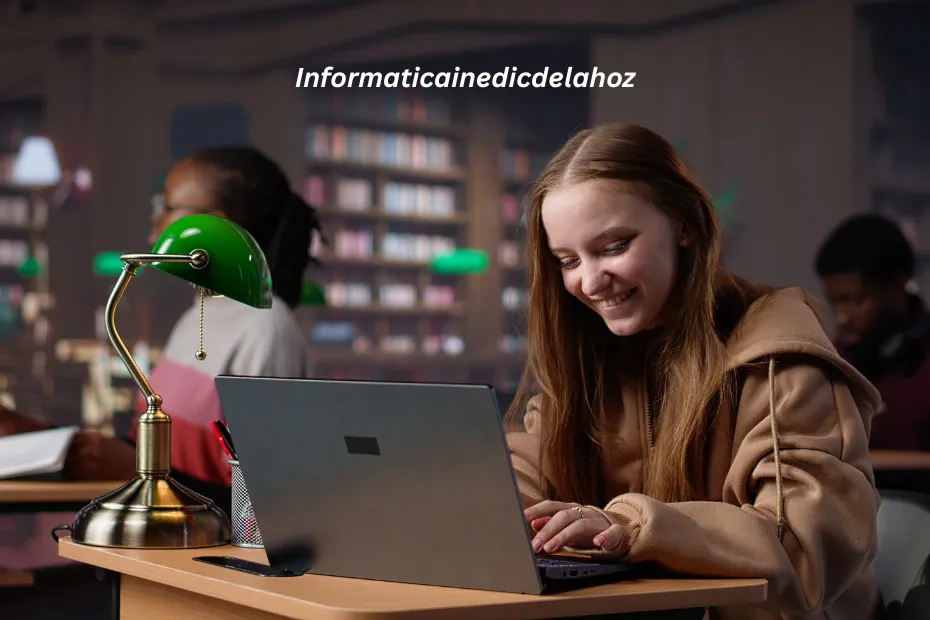
Well… you see, I still remember the first time I walked into a classroom where every kid had a laptop. At first, I thought, “Wow, this is fancy.” But then, hmm… most of them just stared at the screens. Not clueless exactly, but… unsure. You know that feeling when you’re supposed to do something, but you’re not really sure how? Yeah, that. And honestly, that’s exactly the gap Informaticainedicdelahoz fills. It’s not just a “click here, click there” guide. Nope. It’s more like a sandbox, where kids can explore, mess up, try again, and eventually figure things out. Mistakes are okay actually, mistakes are important here.
Learning by Trying (and Failing Sometimes)
I remember this one student. She had to track a plant’s growth in a spreadsheet. At first, she was staring blankly. Numbers, charts, ugh. But then she started entering numbers, making graphs, deleting a few mistakes, and trying again. Suddenly, she looked at me and said, “Oh! I get it now. It’s telling a story!”
Another kid made a small website about his favorite video game. At first, he fussed over colors and fonts. But soon, he realized, hmm… he needed to make the pages make sense, fix errors, and make it look okay for someone else. By the end, he wasn’t just good at websites. He had problem-solving skills, patience, and pride in his work.
You see, this is what makes it different from textbooks. Students engage, struggle, fail a bit, and then really learn. And trust me, that learning sticks.
A Teacher Who’s Actually Done This Stuff
The brains behind this is Jorge Luis de la Hoz Racines, a systems engineer and network security expert. You might think. Okay, sounds technical, boring. But no. He teaches from experience. He’s dealt with real networks, real security problems, and, well, real mistakes. That’s why students learn not just tools, but how to think, how to protect themselves, and how to experiment safely.
One student said, “I used to use the same password everywhere. Now, hmm, I feel safer online.” See? That’s not just tech knowledge. That’s practical life stuff.
Step-by-Step Learning, Slowly but Surely
The curriculum is smart. Kids start with simple things:
-
How computers and networks work
-
Sending emails, making shared documents
-
Organizing info without losing it
Instead of dumping manuals, lessons come in small chunks. Sometimes, they even make a timeline of tech history from the printing press to AI. At first, it seems random. But slowly, it clicks. They begin to see technology as a story, not just a list of facts.
Later on, students dig into systems transport, healthcare, and communication. They analyze, reflect, and try small experiments. And trust me, some of these experiments fail. But that’s the point. Humans learn by failing sometimes.
Projects That Actually Matter
Older students take on projects. One project had kids study local recycling habits. They collected data, made charts, and presented findings. Simple, right? But they came away with real skills: analyzing info, communicating results, organizing ideas.
Other projects: small databases, mini websites, or simulations. And here’s the thing… while presenting, students learn teamwork, patience, and problem-solving. Watching them struggle, laugh, and finally get it. It’s pure teaching gold.
Thinking About Technology’s Impact
Informaticainedicdelahoz isn’t just about “how to use tech.” It’s also about thinking critically. Students ask.
-
How does social media affect friendships?
-
Is oversharing online bad?
-
How might AI or biotech change life in 10 years?
These discussions teach them ethics, responsibility, and long-term thinking. They start thinking about consequences, not just actions. And that, you see, is rare in typical school lessons.
What Students Gain
Students gain more than tech knowledge.
-
Confidence with computers and tools
-
Thinking and problem-solving skills
-
Experience completing real projects
-
Awareness about digital safety
Parents notice kids asking better questions, feeling proud, even helping siblings. Teachers notice higher engagement. Learning stops being boring and becomes a personal adventure.
Teachers Benefit Too
Teachers also gain. The platform offers.
-
Ready-to-use lessons and project ideas
-
Interactive activities to save prep time
-
Ways to guide without micromanaging
Schools get a structured curriculum, but kids get freedom. Teachers guide, students explore. That’s how real learning happens.
Prepping for the Future
Tech moves fast. AI, automation, and global connectivity are everywhere. Informaticainedicdelahoz prepares students with real-life skills.
-
Solving problems with tools
-
Clear communication
-
Working online with others
These aren’t just school skills; they’re life skills for higher education, work, and everyday life. Students are ready.
FAQs (Frequently Asked Questions)
Q1: Is Informaticainedicdelahoz only for advanced students?
Well… not really. Students start with the basics, simple things like sending emails, using spreadsheets, and understanding how computers work. Then, slowly, they move to more complex projects. You see, it’s kind of like learning to ride a bike, you start small, then gain confidence as you go.
Q2: Can this be used on tablets or phones, or just computers?
Mostly, standard laptops work best. But yeah, some activities can be done on tablets or phones. Just, hmm… make sure there’s a keyboard handy for things like spreadsheets or coding exercises.
Q3: Do students learn cybersecurity too?
Absolutely. They learn safe password practices, spotting phishing attempts, and protecting their personal data online. Honestly, I think this is one of the most important parts because mistakes online can be costly, so it’s better they learn safely here first.
Q4: Do students just follow instructions, or do they try things themselves?
Oh, they try a lot themselves. Mistakes are totally okay. In fact, students are encouraged to experiment and figure things out. One student tried making a website—it looked messy at first… but by trying different approaches, he really learned a lot. That’s real learning in action.
Q5: Is informaticainedicdelahoz helpful for teachers?
Definitely. It gives teachers ready-to-use ideas and activity plans. Plus, it saves preparation time. Teachers guide, students explore, and everyone learns together. Honestly, teachers often say this makes lessons feel more alive and less forced.
Conclusion
You see, tech isn’t optional anymore. Students need confidence, practical skills, and critical thinking. Informaticainedicdelahoz gives all this in a story-driven, human-centered way. It transforms education from memorizing facts to active, messy, human exploration. Students learn to think, create, experiment, and grow responsibly. By the end, they’re not just using technology—they’re understanding it, experimenting with it, and shaping their digital future.